
Air Conditioning
AC Repair in Poway, CA
When the afternoon is pushing a hundred and the vents are blowing room-temperature air, you need somebody to find the fault, not guess at it.
Call (858) 224-8842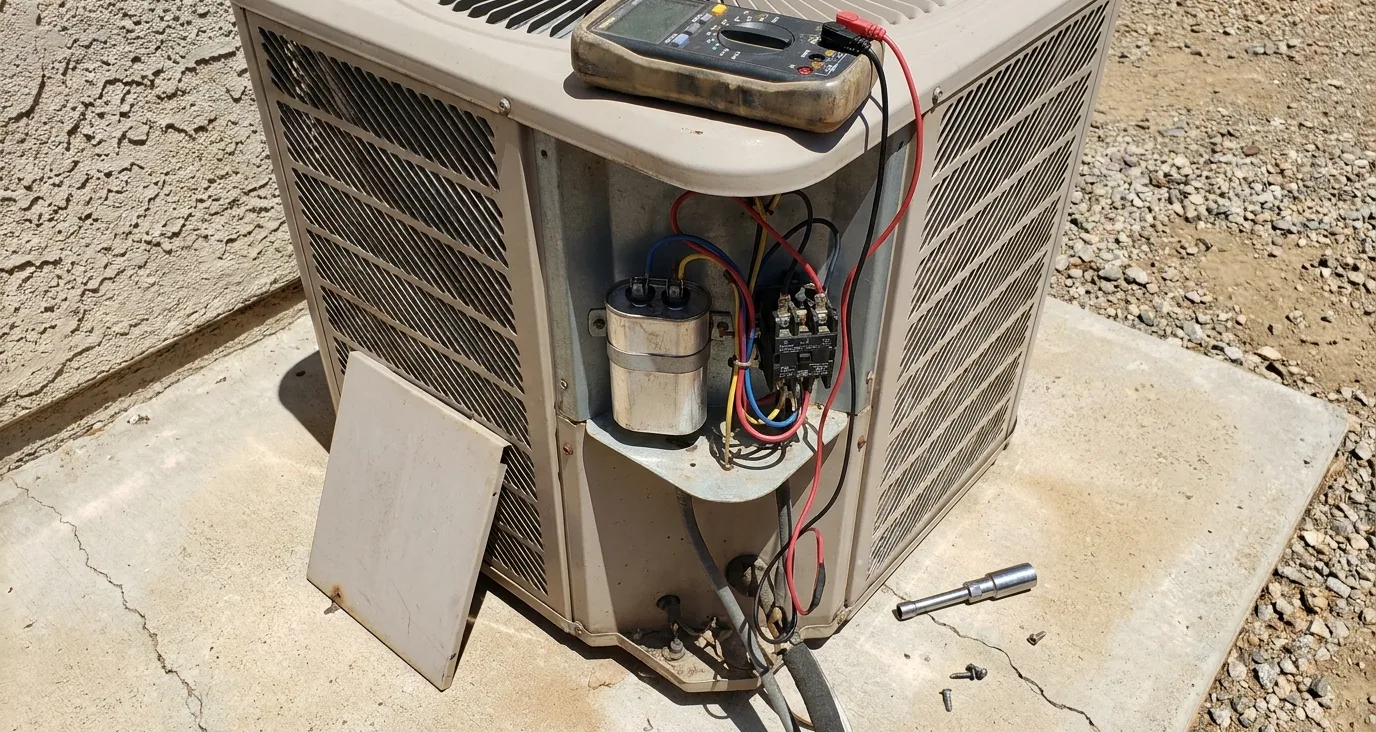
Air Conditioner Repair That Starts With A Diagnosis
An air conditioner that stops cooling has usually been telling you for a while. The house took longer to pull down in the evening. The outdoor unit ran, stopped and started again a few minutes later. There was ice on the copper line one morning. By the time warm air comes out of the registers, a small fault has often become two.
So the first visit is about measurement. We check the voltage and the amp draw at the compressor and fan, test the capacitor against its rating, read refrigerant pressures and line temperatures, and compare the air going into the indoor coil with the air coming off it. Those numbers say whether the problem is electrical, a refrigerant issue, an airflow restriction or a control that has stopped listening.
Then you get it in plain language, with the repair written down before anything is replaced.
What Usually Goes Wrong In A Poway Summer
Inland heat is hard on outdoor equipment. These are the faults that turn up again and again once the valley warms up.
Failed Capacitor
The unit hums but the fan or compressor will not start. Capacitors weaken with heat and age, and a long hot spell finishes off the marginal ones.
Low Refrigerant Charge
Cooling fades, the larger copper line frosts over, and the system runs without catching up. Refrigerant is not used up, so low charge means a leak to find.
Dirty Outdoor Coil
Dust, cottonwood fluff and dryer lint mat the fins and the unit cannot shed heat. Pressures climb and the compressor trips on its own protection.
Frozen Indoor Coil
Weak airflow at the vents and water where it should not be. Usually a clogged filter, a failing blower or a charge problem behind it.
Burnt Contactor
The thermostat calls and nothing outside responds, or the unit will not shut off. Pitted contacts and ants in the housing are both common here.
Clogged Condensate Drain
A wet ceiling under an attic unit or a float switch that keeps shutting the system down. Algae builds in the line over a long cooling season.
Ductless Mini-Splits And The Room That Never Cools
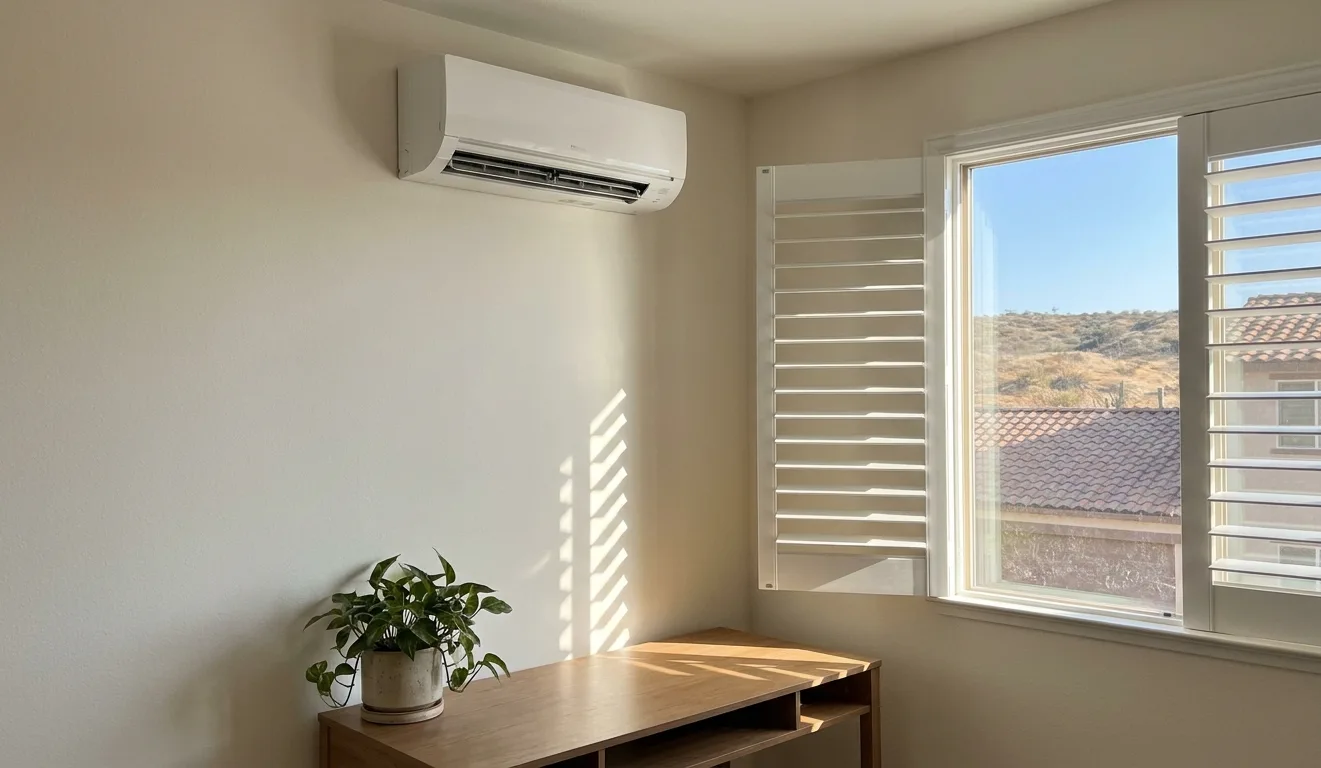
Nearly every two-storey house in Poway has one: the bonus room over the garage, the west-facing bedroom, the addition that was tied into ducts never sized for it. Closing vents downstairs does not fix it and tends to make the rest of the system work harder.
A ductless mini-split puts a small, quiet heat pump on that room alone. It cools and heats, it runs on its own thermostat, and it needs only a small hole through the wall for the line set. We repair existing mini-splits too, including the ones that stopped draining or started flashing a fault code nobody could read.
Sometimes the answer is ductwork instead. HVAC Poway looks at the duct run before recommending new equipment, because a crushed or disconnected duct in the attic produces the same hot room for a lot less trouble to correct.
Repair Or Replace: How We Think About It
There is no age at which an air conditioner must be replaced. There are, though, a few things that tilt the answer. A failed compressor on an older unit is a large repair on a machine with other parts near the end. A system that uses a refrigerant no longer manufactured can still be serviced, but topping up a leaking one gets harder to justify each year. And equipment that was oversized from the start will short cycle no matter how many parts it gets.
When replacement makes sense we size the new system to the house as it is now, with its current windows, insulation and ducts, instead of matching whatever tonnage is printed on the old nameplate. Current equipment has to meet today's efficiency minimums for the Southwest, and in California a changeout normally goes through a permit and a duct leakage test. We walk through each of those steps so nothing arrives as a surprise.
And when a repair is the sensible move, that is what we recommend.
Keeping It Running Between Visits
A few habits take most of the strain off an air conditioner through a Poway summer.
Look At The Filter Every Month
From June through October it loads faster than most people expect. A starved blower is behind a large share of frozen coils.
Give The Outdoor Unit Room
Keep shrubs, stored bins and leaf litter a couple of feet back on every side so the coil can pull air through.
Rinse, Don't Blast
A gentle spray from a garden hose clears surface dust from the fins. A pressure washer folds them flat.
Leave The Vents Open
Shutting registers in unused rooms raises pressure in the ducts and pushes more air out through the leaks.
Book A Check Before The Heat
Spring is the easy time to catch a weak capacitor or a slow leak, well ahead of the first real hot week.
Air Conditioning Questions We Hear In Poway
Why is my air conditioner running but not cooling the house?
The usual suspects are a dirty filter or coil, a low refrigerant charge from a leak, a failed capacitor that leaves the compressor off while the fan still spins, or ducts leaking into the attic. Check the filter and make sure the outdoor fan is turning. If both look fine, it needs gauges and a meter.
There is ice on the pipe outside. What should I do?
Switch the system off at the thermostat and set the fan to on so the ice can melt. Running it frozen can damage the compressor. Ice points to low airflow or low charge, and neither clears up without a repair.
Can an older system that uses R-22 still be repaired?
In many cases, yes. Electrical parts, fan motors, contactors and drain problems have nothing to do with the refrigerant. What has changed is that R-22 is no longer produced, so a unit with a significant leak is the one where replacement starts to make more sense.
How long does an AC replacement take?
A like-for-like split system changeout is commonly a single working day. Jobs that include new ducts, a relocated unit, electrical changes or an attic air handler in a tight space take longer, and we say so up front.
Is a bigger air conditioner better for a hot inland house?
No. An oversized unit cools the air quickly, shuts off, and starts again minutes later. That wears the compressor, leaves rooms uneven and uses more power. The right size runs longer, steadier cycles.
Do you work on heat pumps as well as standard air conditioners?
Yes. A heat pump is an air conditioner that can also run in reverse, and the cooling-side faults are the same. The heating side is covered on our heating page.