
Heating
Heating Repair in Poway, CA
Poway winters are short, which is exactly why a heater gets forgotten until the first cold night asks it to work.
Call (858) 224-8842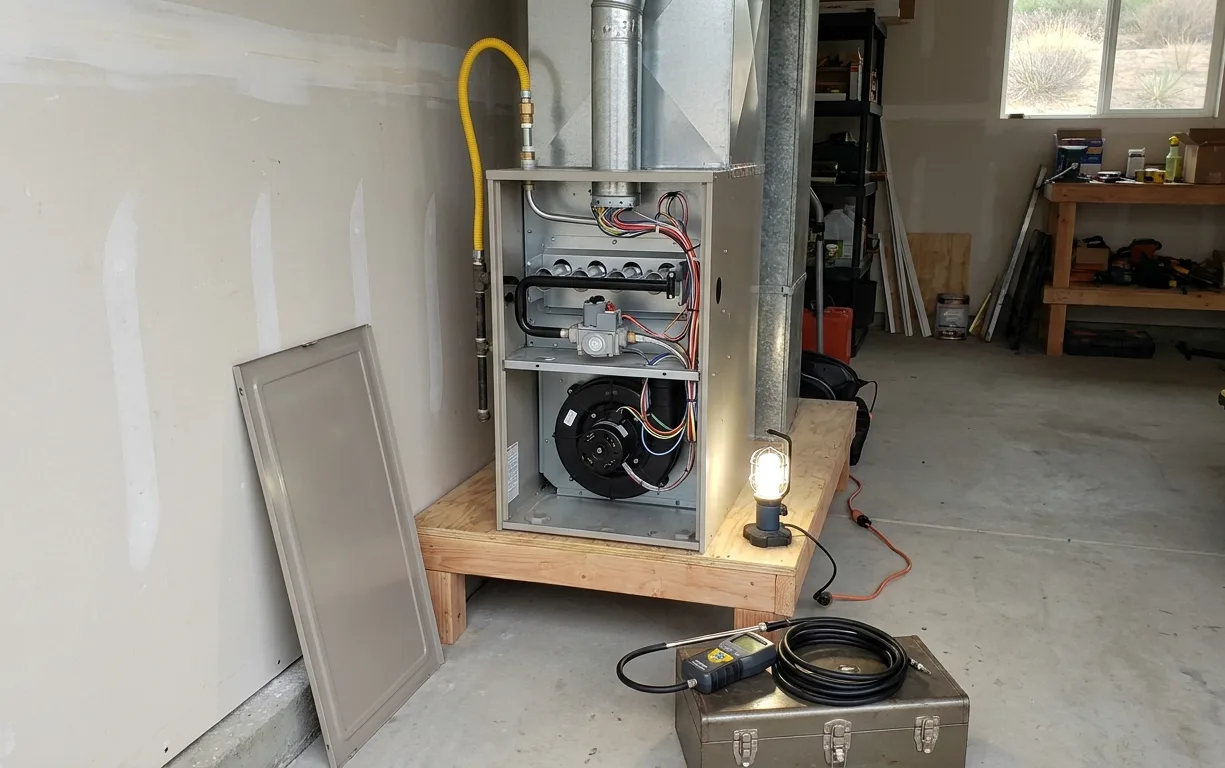
Furnace And Heat Pump Repair For Inland Winters
A heater here sits idle for seven or eight months. Dust settles on the burners, a spider builds in an orifice, the flame sensor grows a film, and the igniter that was nearly finished last March is still nearly finished in November. Then a clear night drops the valley into the low forties and everything is asked to start at once. That is the week HVAC Poway hears from most people about heat.
We work on gas furnaces in garages, closets and attics, on heat pumps, and on the gas-electric package units that sit on some roofs and side yards around town. The approach is the same for each: watch the unit try to start, see where the sequence stops, and test that part and the things that feed it before replacing anything.
What A Struggling Heater Is Telling You
Furnaces fail in a recognisable order. Where the start-up stops says a great deal about why.
Clicks, Then Nothing
The igniter is not lighting the gas. A cracked hot surface igniter is the common cause; a gas valve or control board is next on the list.
Lights, Then Shuts Off
Flame for a few seconds, then out, three times, then lockout. A coated flame sensor cannot prove the burner is lit, so the board closes the valve.
Blows Cool Air
The blower runs with no heat behind it. Often an overheated furnace tripping its limit switch because a filter or duct is choking the airflow.
Short, Frequent Cycles
A few minutes on, a few off. Restricted airflow, a thermostat in a poor spot, or a furnace larger than the house needs.
Rumble, Bang Or Squeal
Delayed ignition makes a boom at start-up. A squeal is a blower bearing or belt. A rattle is usually a loose panel, and sometimes something more serious.
Heat Pump Stuck In Cool
Cold air in heating mode usually traces to the reversing valve, its solenoid or a low charge. Frost that never clears points at the defrost control.
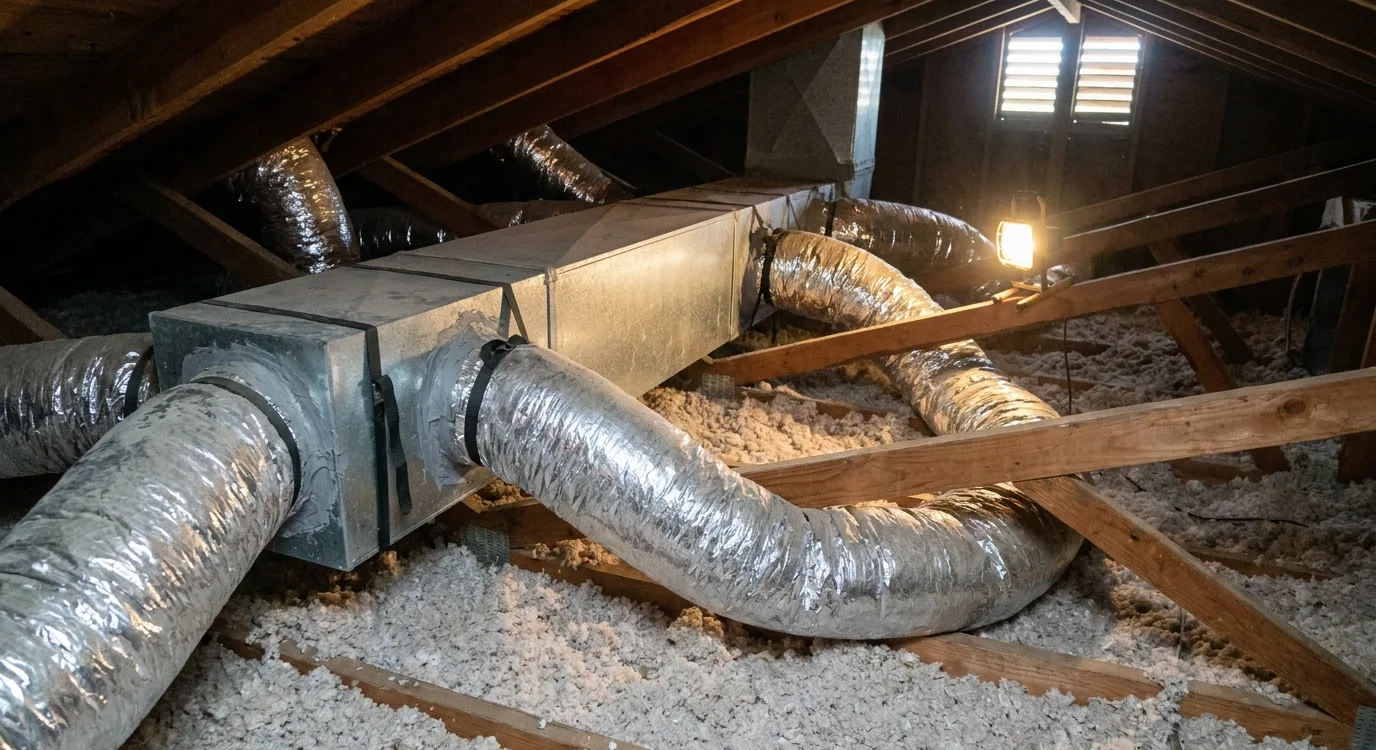
The Ducts Do Half The Work
In most Poway houses the ducts run through the attic, which is the coldest place in the building on a winter night and the hottest on a summer afternoon. Every loose connection up there sends air you paid to warm into a space nobody lives in.
Flexible duct sags, gets stepped on, and comes off its collar. Rodents chew through the jacket. Tape dries out and lets go. From the hallway all you notice is a bedroom that stays cool while the furnace runs and runs. We check static pressure and look over the duct system as part of a heating call, because swapping furnace parts will never warm a room whose duct is lying open on the insulation.
Repairs range from re-strapping and sealing a few joints to replacing runs that are past saving. Either way you see photos of what was found.
Gas Furnace Safety, Without The Scare Tactics
A furnace burns gas inside your house and sends the exhaust outdoors through a flue. When that works, it is uneventful. The things worth checking are the ones that can stop it from working: a cracked heat exchanger, a flue that has come apart or been blocked by a nest, a burner flame that lifts or rolls out, and a garage furnace that has lost the combustion air it needs.
We test what comes out of the flue with an analyzer instead of judging by eye, and we show you the reading. If something is unsafe we say that plainly and explain what it means. If it is fine, we say that too. You should also have a working carbon monoxide alarm on every level of the home, regardless of the age of the heater.
If you ever smell gas, leave the house and call the gas utility from outside before you call anyone else.
Heat Pumps In Poway
Mild winters make this one of the better places in the country to heat with electricity. A short primer.
One Machine, Two Seasons
A heat pump is an air conditioner with a valve that lets it run backwards, moving warmth indoors in winter and out in summer.
Suited To The Climate
They are at their most efficient when winter lows stay above freezing, which describes nearly every night here.
Air That Feels Different
Supply air is warm, not hot, and cycles run longer. That is normal operation, not a fault, and it tends to even out the house.
Frost Is Expected
On a damp cold morning the outdoor coil frosts and the unit pauses to melt it. Steam rising off the unit for a minute is the defrost cycle doing its job.
Replacing A Furnace With One
It can be done, and often is. The electrical panel, the duct sizes and the existing gas line all figure into whether it suits your house.
Heating Questions From Poway Homeowners
My furnace has not run since last winter. Should I do anything before turning it on?
Put in a clean filter, make sure nothing is stored against the furnace, and run it for a full cycle on a mild day while you are home. A dusty smell for the first few minutes is ordinary. Anything that smells like gas, or a furnace that tries and fails to light, is a reason to switch it off and call.
Why does the heater turn on and off every few minutes?
That is short cycling. The most common cause is the furnace overheating from poor airflow and shutting itself down on a safety limit. Start with the filter. If a new one does not change the behaviour, the cause is further in.
Is it worth repairing an older furnace?
Often it is. Igniters, flame sensors, inducer motors and control boards are routine repairs on a furnace that is otherwise sound. A cracked heat exchanger is the main fault that ends the conversation, because it is a safety problem and not a comfort one.
Can I switch from a gas furnace to a heat pump?
Usually. We look at the electrical service, the size and condition of the ducts, and how the house is used. Poway's climate suits heat pumps well, and one system then handles both heating and cooling.
Why is one room always colder than the others?
Nine times in ten it is the duct serving that room: too long, too small, kinked, leaking or disconnected in the attic. Rooms over a garage and rooms at the far end of the house are the usual victims.
How often does a heater need servicing?
A check ahead of each heating season is a sensible rhythm. It covers the burners, the flame sensor, the igniter, the flue and the safety controls, which are the parts that sit unused most of the year here.